Categories
Arch 698b: The Other California

Instructor: Alison Hirsch

Carceral Landscapes: The Prison Industrial Complex in Central California

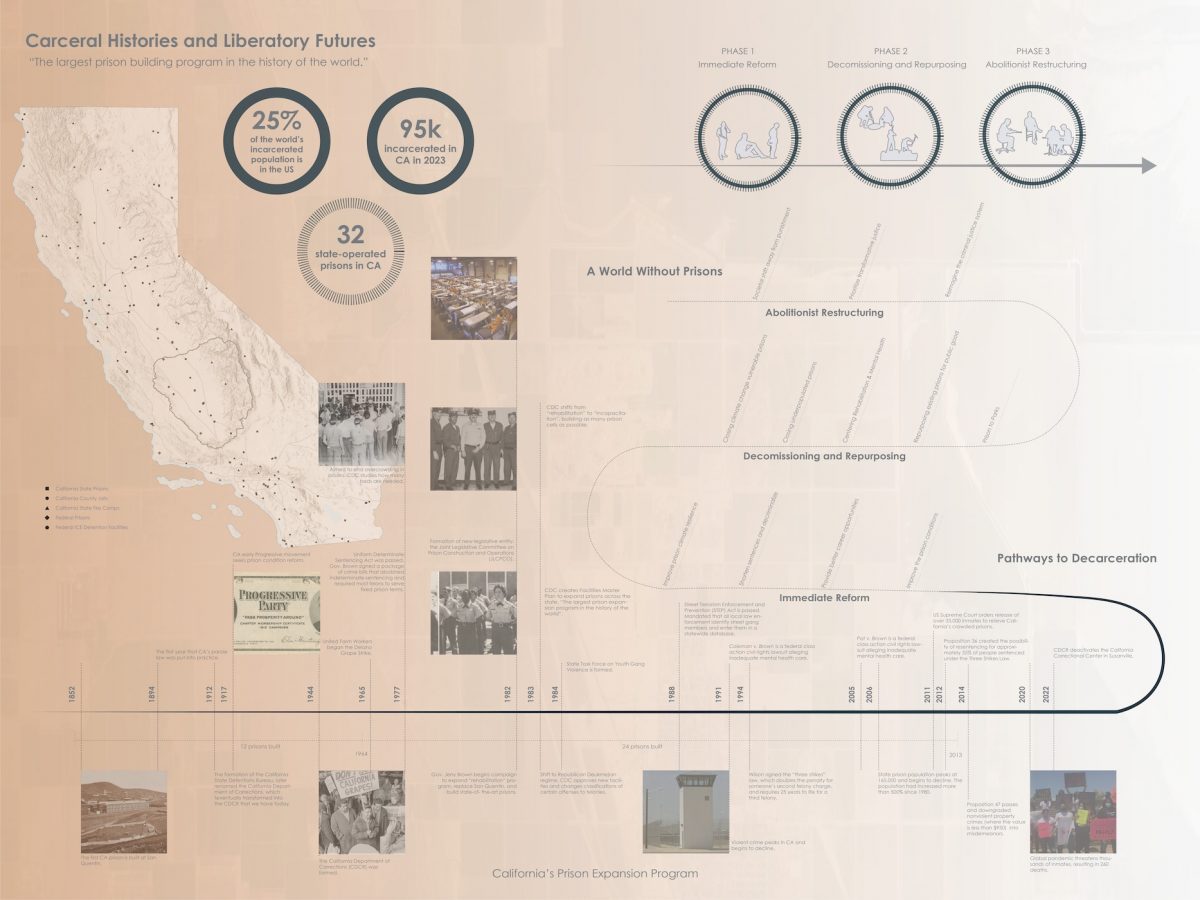
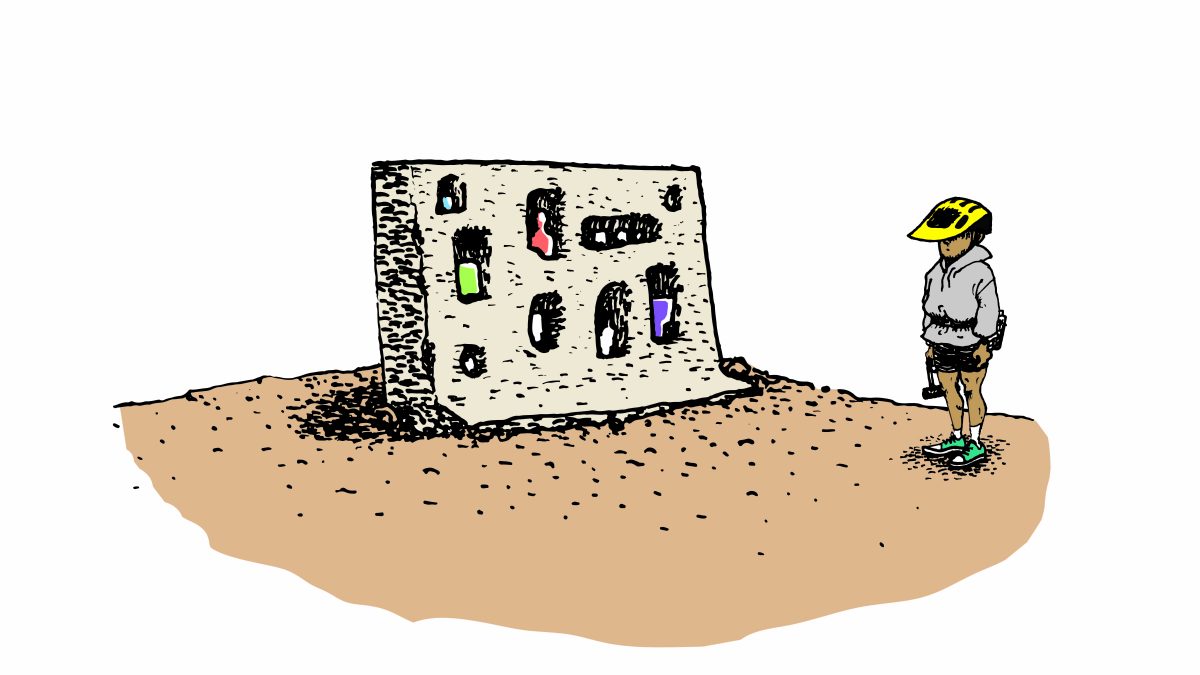
My research will focus on carceral landscapes in the Tulare Basin. I will study and catalog their socio-spatial conditions, the landscape-based systems they participate in, and their potential for liberatory futures. My research begins with the existing conditions of the prison industrial complex in the Tulare Basin and their impact on prisoners cycling through the carceral system. I hope to create a clear analysis of the specific siting of prisons in the Tulare Basin and the unique implications of California’s central valley landscape on a socioeconomic, racial, and spatial level. My research will span the arenas of labor, migration, criminal justice, rural economies, punitive architecture, climate resilience, and abolitionist futures. I will also collect extensive existing precedents for the removal of prisons, the repurposing of former prison sites for future public good, and exploratory innovations in restorative and transformative justice. I will aim to answer these two questions: 1) How do prisons shape the landscape of the Tulare Basin, and vice versa? And 2), how can we design liberatory futures in a landscape of mass incarceration?
Categories
Arch 698b: The Other California

Instructor: Alison Hirsch

Ain’t nothin’ out here: recreation, restoration, and remembrance in Kern County’s oil towns

Between the vast oilfields of western Kern County and the voluptuous slopes of the Tremblor Range lie a string of small towns, founded with the discovery of oil in the early 1900s. Ranging in size from 50 to 9,000 souls, these towns endure environmental degradation, progressive erasure, and, according to locals, a distinct lack of things to do. I attempt to address these three issues by integrating outdoor recreation, habitat restoration, and land art into the Tremblor Range National Monument.

Categories
Arch 698b: The Other California

Instructor: Alison Hirsch

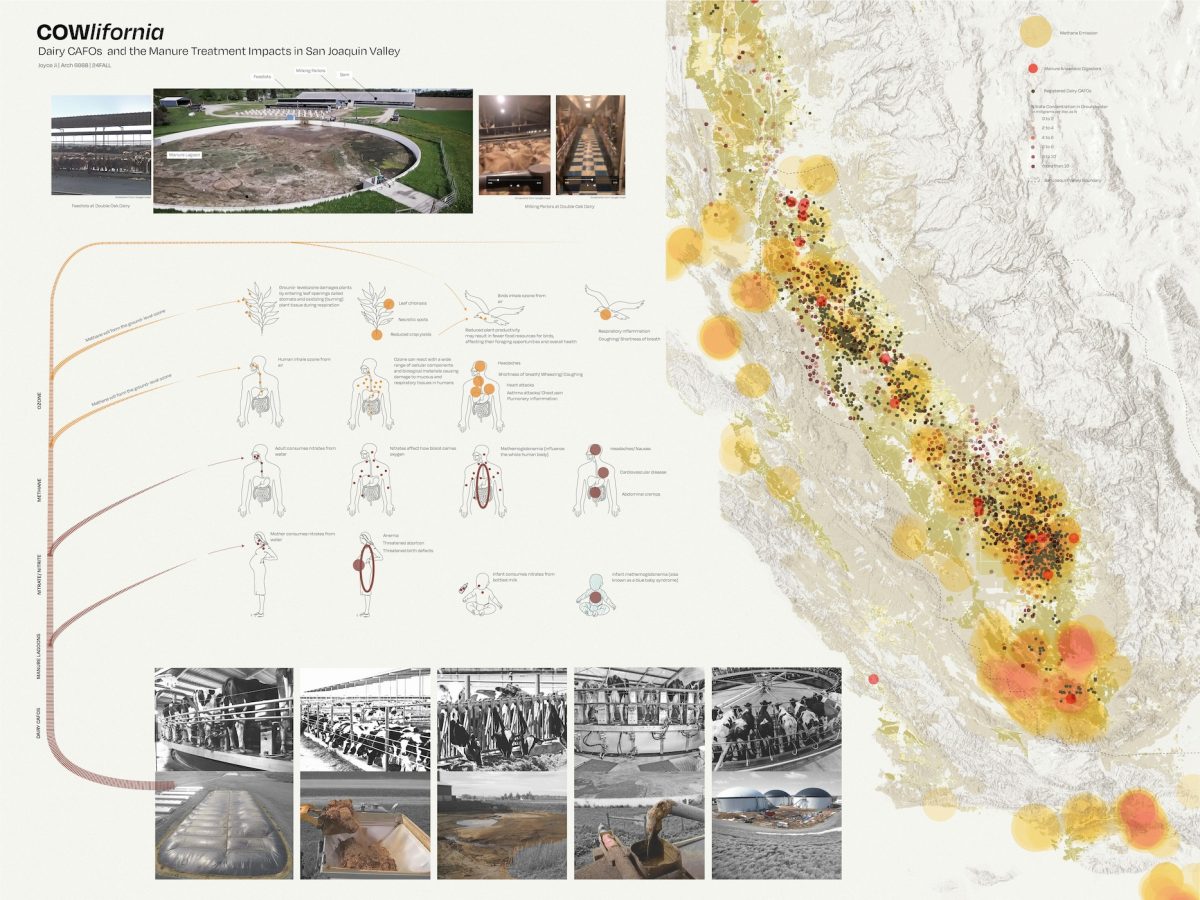
Cowlifornia

The industrial-scale dairy farming pursuit of producing high-yield products and has neglected cows basic rights, which also caused a lot of carbon footprint (especially methane) to the environment. The Central Valley is a region faces severe water shortage challenges, however, the advocacy nonprofit Food and Water Watch estimates that it takes 142 million gallons of water a day to maintain the dairy cows in California. On the other hand, the public may not be aware of the amount of dairy farms and the living conditions of cows, because most of them are surrounded by fields of feed crops – the fact that cows living quality is bad and the dairy industry uses millions of gallons of water a day is not being awareness enough. For the future of dairy industry, we should stop the expansion of existing industrial- scale dairy farms, find a more sustainable dairy design strategy not only limits the water use or carbon footprint, but also improve cows’ living quality. The design starts with the protection of cows welfare and aims to prioritize cows’ physical health and emotional pleasure, finally there would be a Cowtopia for cows to live their happy lives.

Categories
Arch 698b: The Other California

Instructor: Alison Hirsch

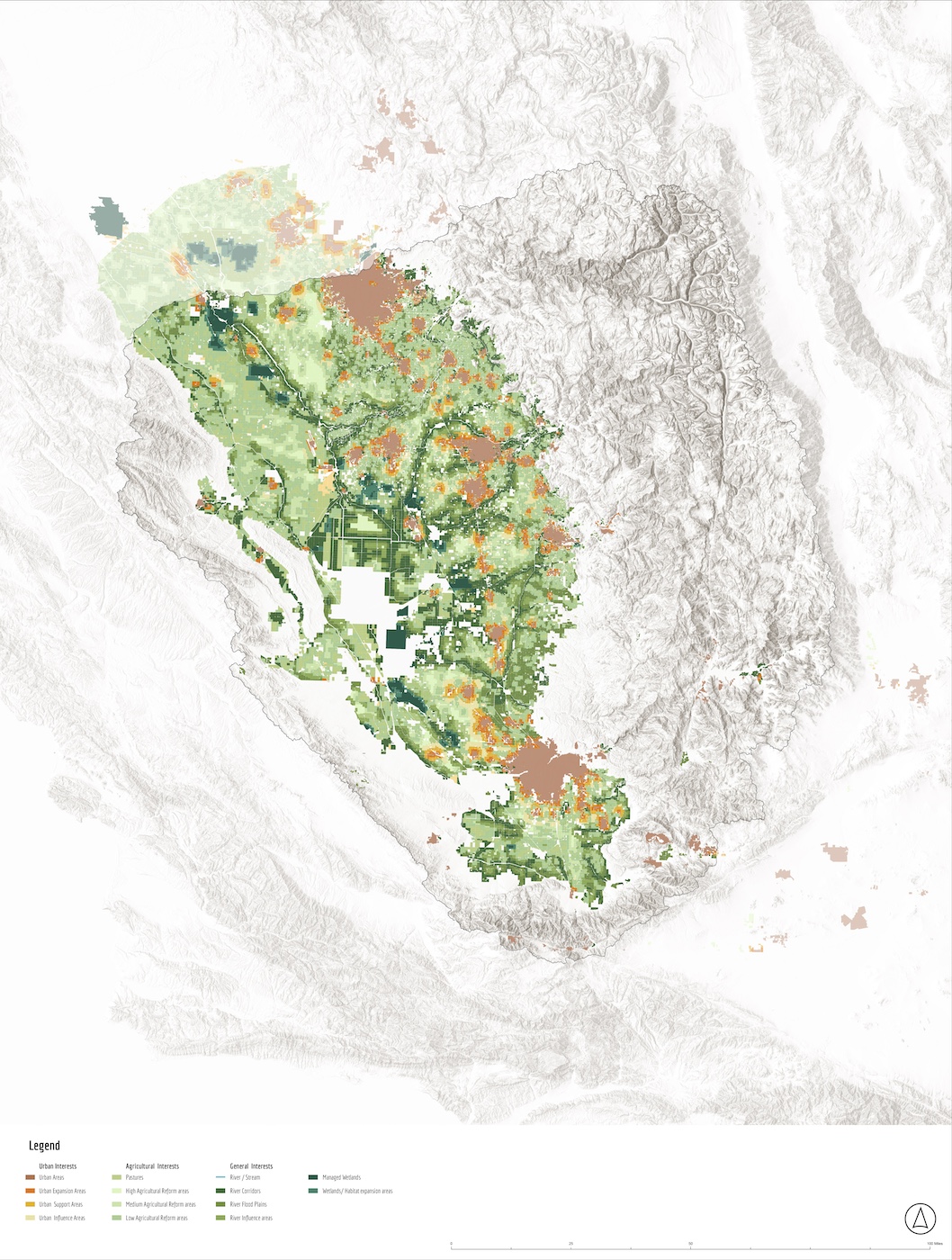
FALLOWS NO MORE (Sustainable Economic Landscapes of Tomorrow)

The thesis aims to mitigate the adverse effects of large-scale fallowing of agricultural lands in California in response to the Sustainable Groundwater Management Act’s (SGMA) regulations on groundwater pumping. This situation threatens job loss and food security and exacerbates issues in the Central Valley, such as landfallowing, desertification, dust storms, and health hazards.

The project introduces a comprehensive strategy and system that identifies stressed landscapes and facilitates farmers’ transition towards sustainable practices. It addresses multiple challenges simultaneously, including industrial and agricultural activities’ impact on biodiversity and air quality, as well as problems that plague the valley, such as land subsidence, Infrastructure damages, flooding, soil salinity, groundwater depletion, and pollution. The system ensures a holistic approach to sustainability.

The project seeks to minimize land fallowing while maintaining job security and food production through proactive measures, policy recommendations, incentives, and zoning. Ultimately, it envisions a greener future for the Central Valley, where ecological needs are met alongside economic sustainability.

Categories
Arch 698b: The Other California

Instructor: Alison Hirsch

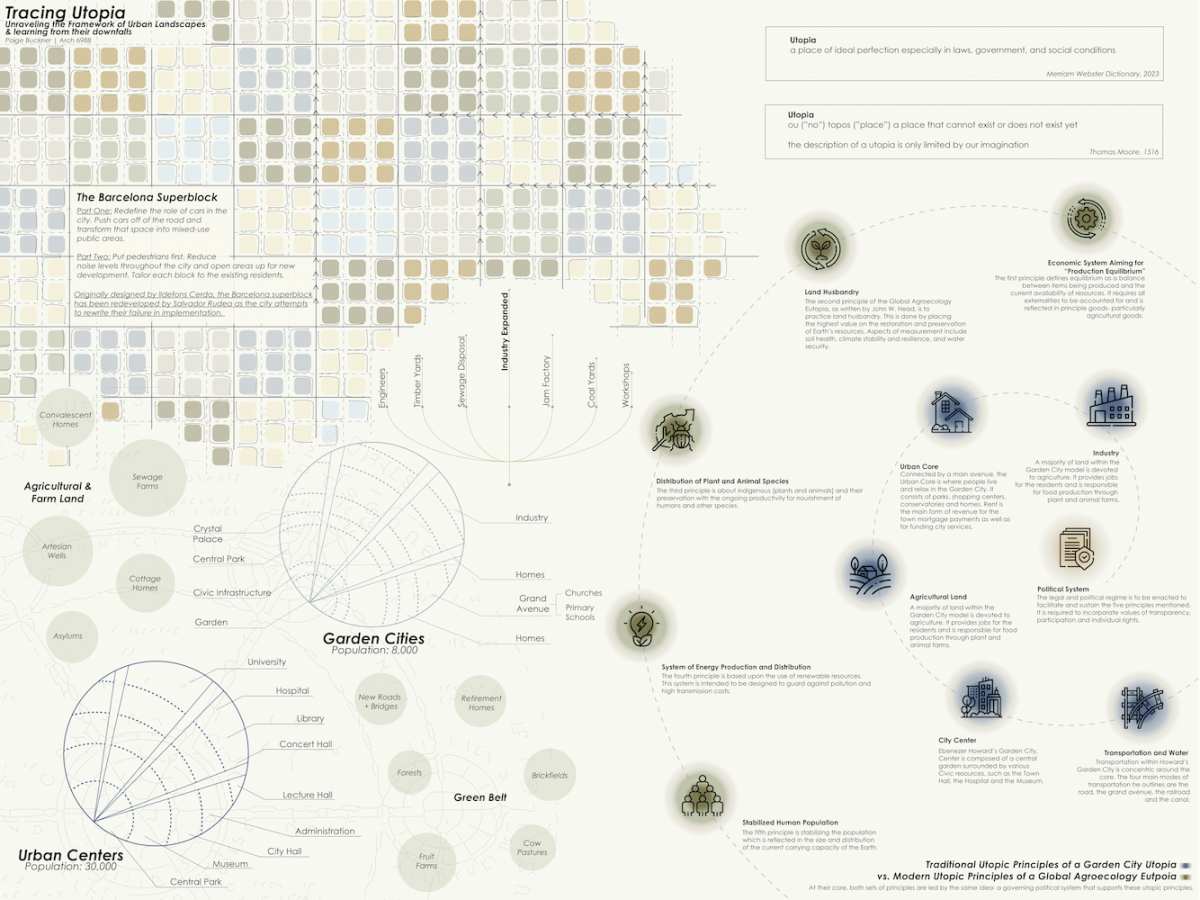
Blueprinting Resilience. Designing a Utopic Future for the Central Valley

In this project, I develop a new Utopian design theory for the Central Valley, comprising seven principles for rural town development. Inspired by historical utopian concepts, I analyze the components needed for a utopia, including design, governance, resource access, and more. Acknowledging the unattainable nature of a true utopia, I focus on crafting a modern utopia in the San Joaquin Valley, addressing essential resource provision and community cohesion. Tailoring design principles to each community’s needs, I consider challenges such as climate change and propose replicable block strategies. Specifically, I’m designing for Alpaugh, a small rural town with unique challenges, serving as a model for Utopian design implementation.

Categories
Arch 698b: The Other California

Instructor: Alison Hirsch

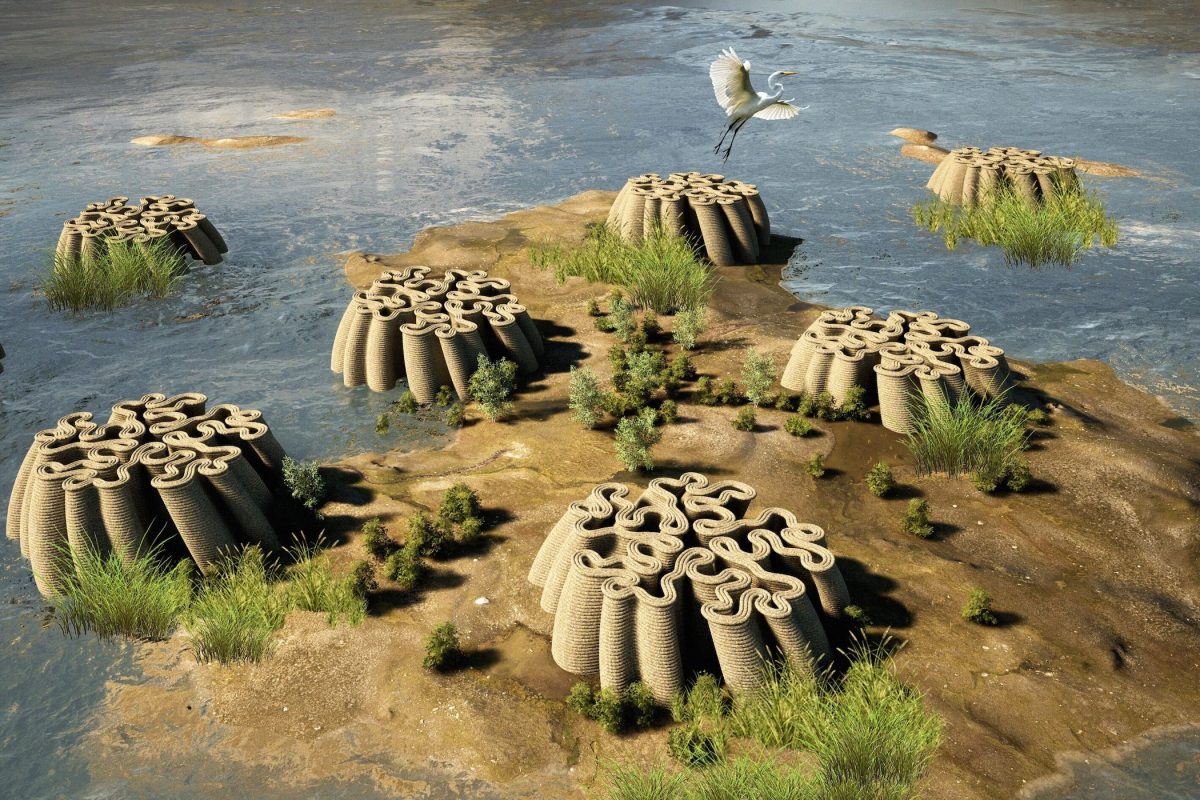
Textile Landscapes: The Material Future of Tulare Lake

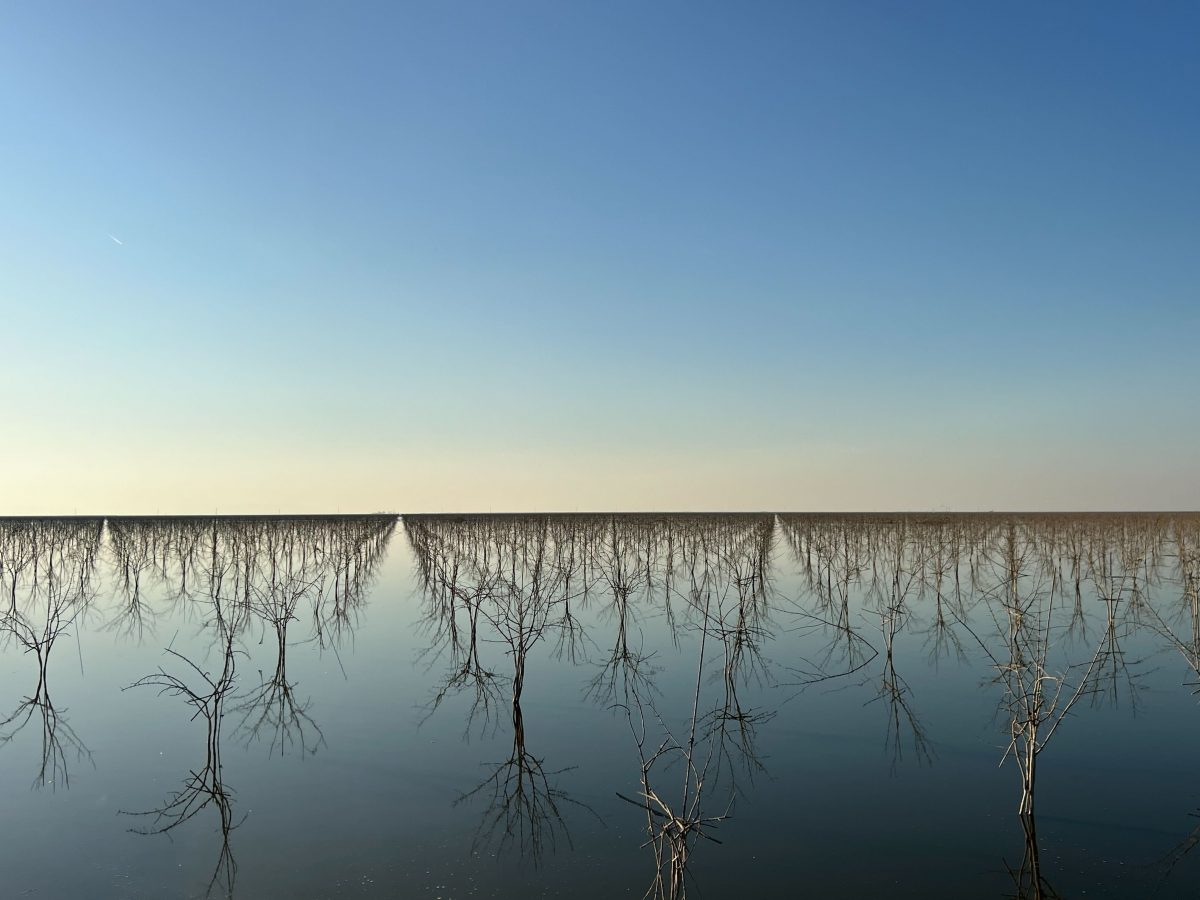
The project examines cotton’s material properties as a key non-food crop in the Central Valley, with a historical significance in the Tulare Lake bed’s agriculture. It addresses the environmental impacts of traditional farming and water management, focusing on water dynamics in Tulare Lake during fluctuations and unpredictable rainfall. The research explores sustainable methods to rehabilitate the lake, endorsing a “material ecology” perspective. By studying cotton secondary cellulose as a biocomposite filler, it suggests a novel approach that reevaluates cotton cultivation and water infrastructure in an ecological context. This approach aims to shorten the material supply chain and underscore the viability of sustainable land management. By leveraging the principles of regenerative agriculture and technologies embracing a holistic view of biomaterials and fiber futures, the project articulates a comprehensive strategy for environmental stewardship at landscape and material levels.

Categories
Arch 698b: The Other California

Instructor: Alison Hirsch

The Other California: land, labor, liberated futures in CA’s heartland

The broad topic of this year’s Advanced Design-Research curriculum is a deep consideration of California’s ‘Other’ – the invisibilities of violence and work, land and labor that fuel the nation – calorically and economically – specifically in the Tulare Lake Basin. Starting with the reemergence of the lake that has captured the nation’s imagination – a phantom that reemerges despite the industrial violence used to erase it – its story has become a symbol of a possible future, of liberation and transcendence, within and despite Capitalist ruins. Yet this offer of transcendence has nuance – with the engineering that hijacked the lake to facilitate 150 years of industrial agriculture came communities of people stolen for and drawn by capitalist promise that have been impacted by the flooding. Designing a nuanced future that negotiates what was, what is, and what can be in this landscape is the primary question.

Categories
ARCH 502A: Hidden Infrastructure

Instructor: Wendy W Fok

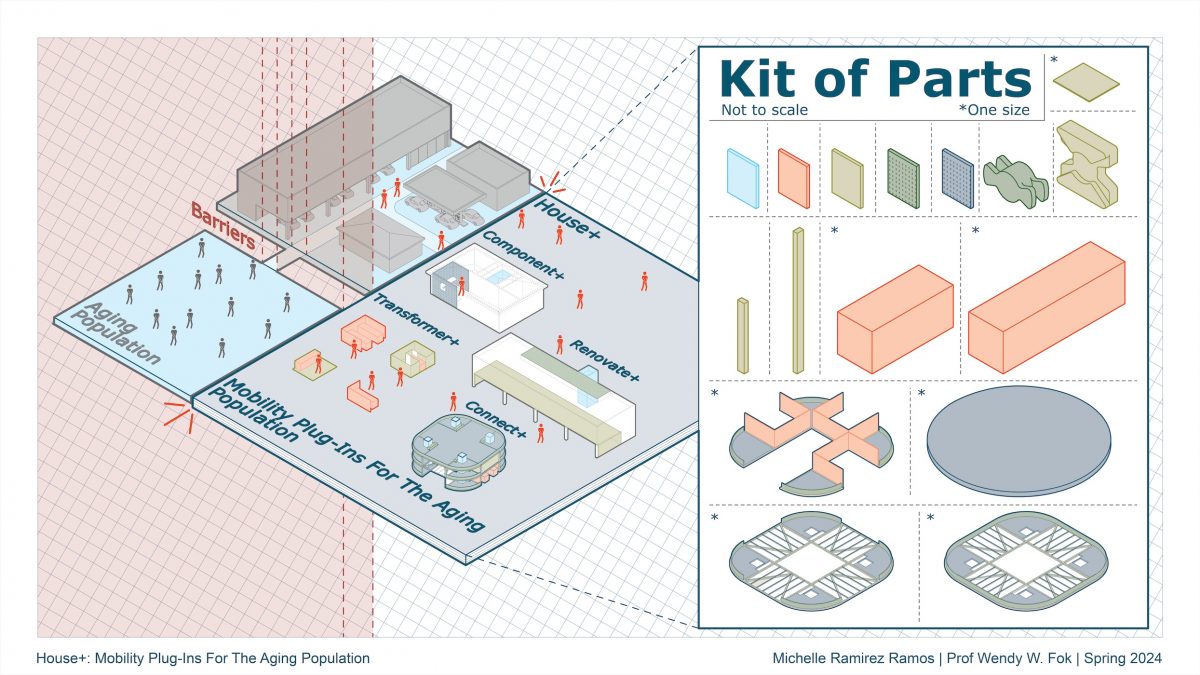
House+: Mobility Plug-Ins For The Aging Population

The world is not built for seniors in mind. With a focus in Los Angeles, there are many environments from sidewalks to living spaces that are not friendly for seniors. If environments are not friendly, this could create barriers to interactions with the environment leading to depression, isolation, and even death. Since the “Crossing” has occurred, the population percentage of ages 65 and above is growing so rapidly that it is driving seniors to slowly isolate themselves from the rest of the world because the existing infrastructure is not designed for the aging population nor is it designed to accommodate a person’s full life cycle. This questions if Architecture is a barrier or if Architecture may be a solution.

House+: Mobility Plug-Ins for the Aging Population is an exploration of a plug-in system using a kit of parts in order to create an accessible space and make a change within the social dynamics of the multigenerational experiences. The challenges focused in this thesis are about changing the existing living conditions for seniors and how cities can be rebuilt accessible and integrable for multigenerational spaces without affecting new generations and incorporating the population as a whole rather than isolated groups. While specifically focusing on the aging population, this plug-in system can be customizable to the user to age with them accommodating a person’s full life cycle.

Categories
ARCH 502a: FACE VALUE

Instructor: Erin Kasimow

The Decontextual

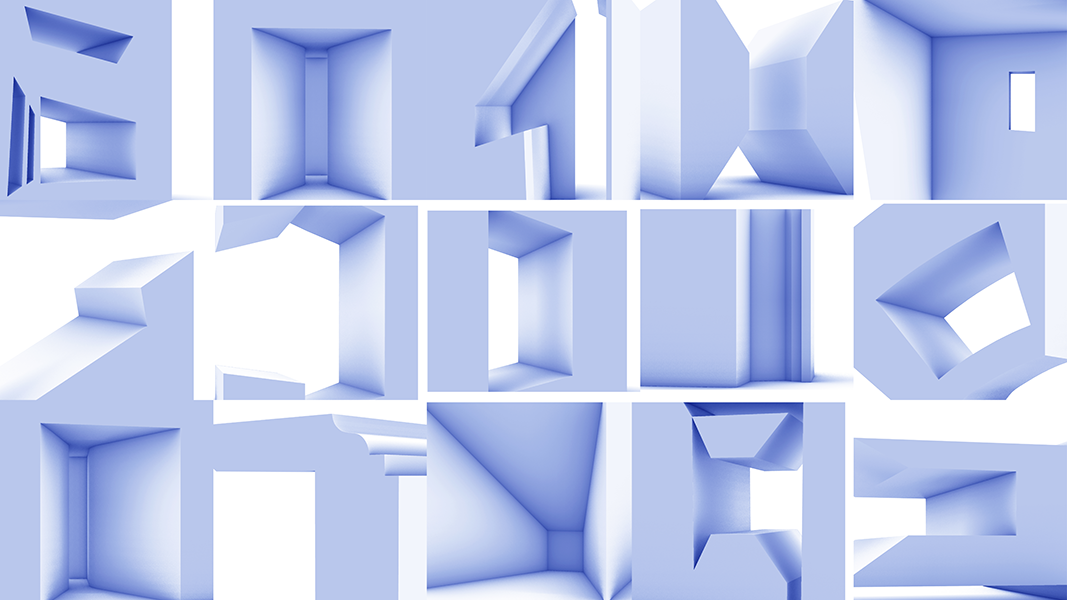
The Decontextual uses photographic abstraction as a generative tool to reconsider and reevaluate architectural spaces and representation. Inspired by a curated selection of architectural photographs depicting interiors and specific details or cropped moments of spaces, rather than overall depictions of rooms or building exteriors, led to a perspective-based approach to designing. Emphasis is placed on smaller scale architectural moments such as apertures, thresholds, and corners specifically composed to focus attention on elements that might otherwise go unnoticed. Buildings are designed from inside to out through evaluating how these moments interact with color, light, and shadow. The final product is presented entirely via photographed interior perspective images in order to generate new narratives about familiar places and challenge conventional notions of architectural representation.

Categories
ARCH 502a: FACE VALUE

Instructor: Erin Kasimow

Face First

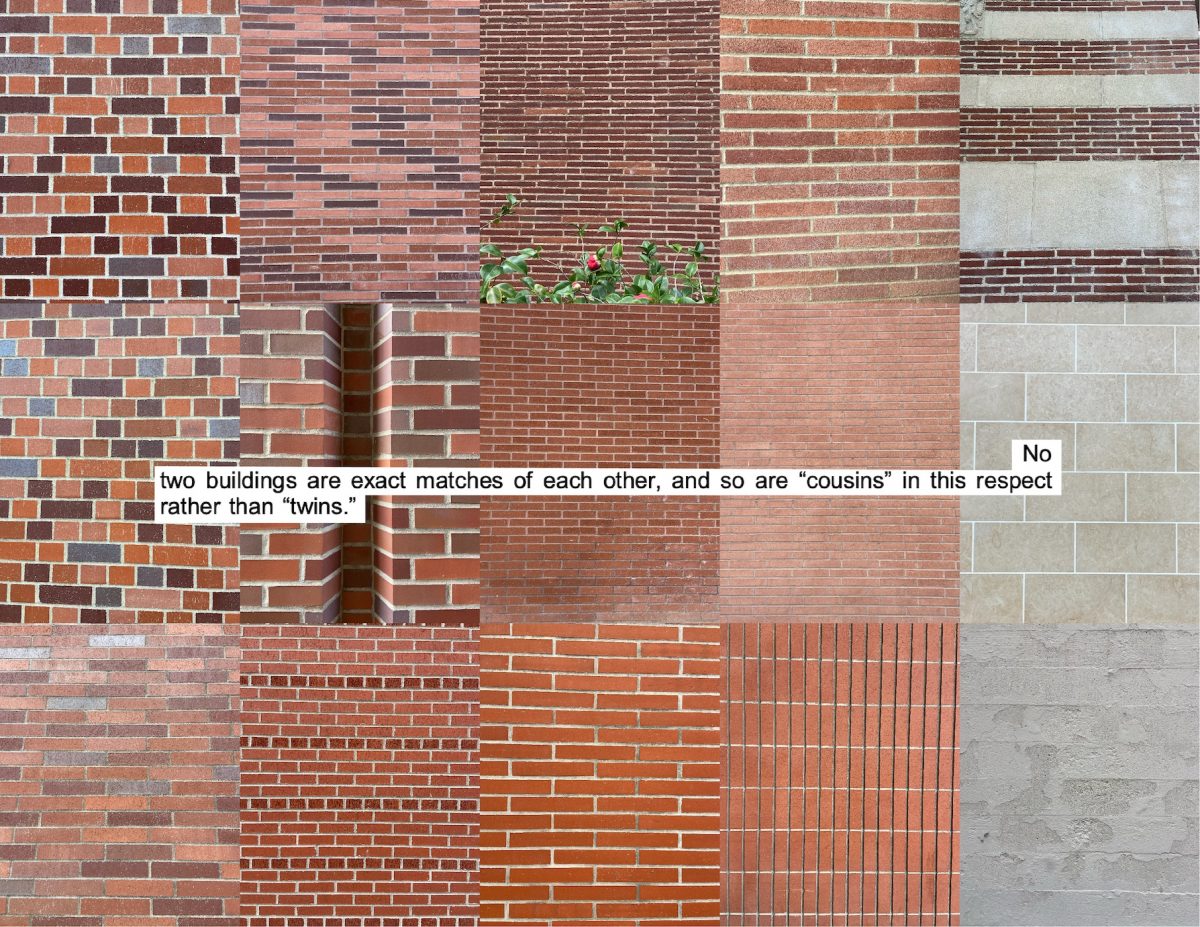
The facade is our first impression of a building. An exterior elevation can help us infer what our experiences will entail before we even step inside OR it can mask what awaits. At USC, we have signage that tells us exactly what the building is, creating an environment where the facade is more aesthetic than informational. USC has placed importance on maintaining a visual language through duplicated facades. The result is a first impression which is repeated over again until the campus becomes a conjoined blur. Face First seeks to disrupt this recurrence through re-writing the campus design guidelines that dictate our facades. A sneaky way to remix and redeploy governing systems may yield a campus that maintains branded continuity while also updating and refreshing our architectural landscape.