Categories
ARCH 502A: STORIES OF THE SECOND DECADE

Instructor: Jimenez Lai

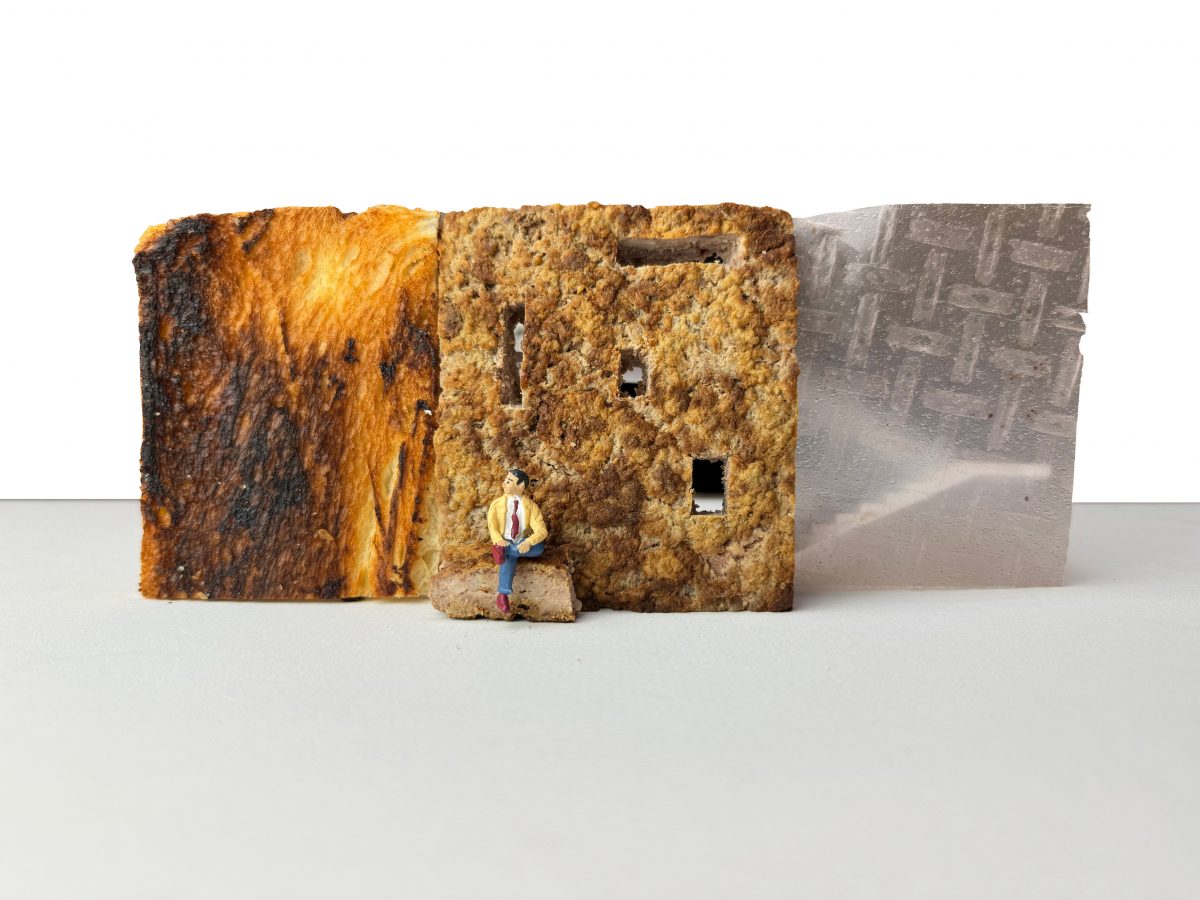
Edible Architecture

This thesis explores the relationship between food and architecture. My exploration of this comparison is done by: diagramming architecture through food, plating food architecturally, photographing the construction process of a dish, making architectural models out of food, blurring food and building textures through elevations, using molds to make edible massing models, and redlining a menu. Through these modes, a discussion is opened on the difference between permanence and temporality, and how it can shed light onto the wasteful food and building construction industry. One third of the food produced for human consumption is wasted, globally, and the building and construction industry is the largest emitter of greenhouse gasses by far.

Categories
ARCH 502A: STORIES OF THE SECOND DECADE

Instructor: Jimenez Lai

Day Before War

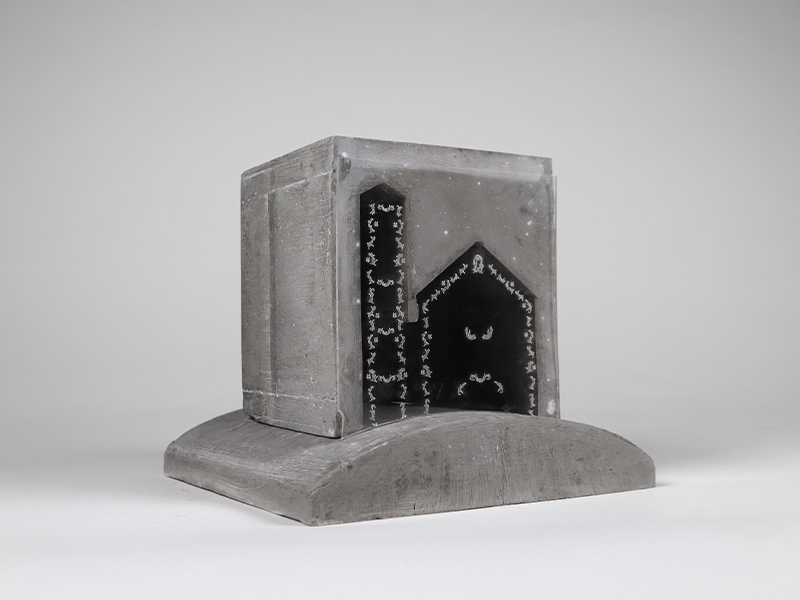
The impact of trauma on our memory of architecture. Through excerpts from memoirs, this project explores pre-war memories of dwelling spaces. Layers of transparency separate what was forgoten from what was remembered. The replacement of omissions become vital to making rational pieces of architecture that function as we are conditioned to expect. The absence of a door creates a room closed on all four sides; the loss of a stair makes levels all but useless. A surrealist undertone is exposed which unveils the true essence of a memory. It allows for disobedience against the rules of logic, gravity, and order.

Categories
ARCH 502A: STORIES OF THE SECOND DECADE

Instructor: Jimenez Lai

STORIES OF THE SECOND DECADE

With one year remaining until the first quarter of the 21st Century completes, the identity of this time period is currently being forged. In this thesis group, the students will tell stories of our era, and dial the conceptual scale of their stories onto a macro-context at this moment in the ongoing history of architecture. In particular, the stories will demonstrate the spirit of our times. This can be done with the sensibility of the images, the approach to working methodology, the cadence of the chosen subject matter, the mastery of contemporary technologies, or other means and methods.

Categories
ARCH 502a: FACE VALUE

Instructor: Erin Kasimow

Perspective Unveiled : Architectural Cubism through Dual-Dimensional Collage 

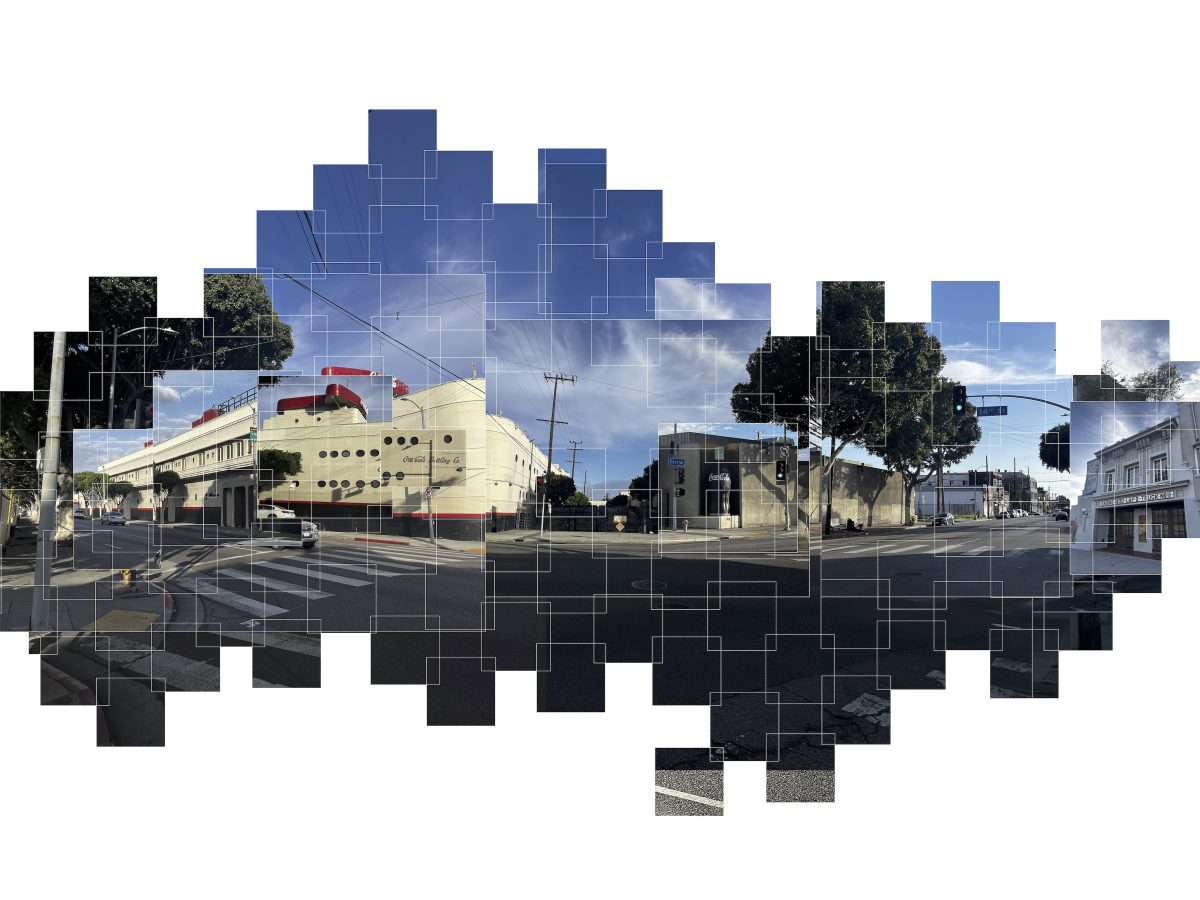
In exploring the intersection of art, architecture, and perception, this thesis investigates the creative integration of 2D photo collage techniques to construct a 3D dimensional representation. By strategically overlapping multiple photographs taken at the same location and magnifying key elements such as location, architecture info, and symbols, the collage piece employs visual hierarchy to highlight significant architectural details. The 2D photo collage becomes a plan for constructing a 3D dimensional portrayal of architecture aesthetics and information. Through its dynamic portrayal of space and perception, these pieces embody the essence of architectural cubism, inviting viewers to reconsider their understanding of the built environment.

Categories
ARCH 793AB: Construction, Abstracted

Instructor: Ryan Tyler Martinez

Construction, Abstracted

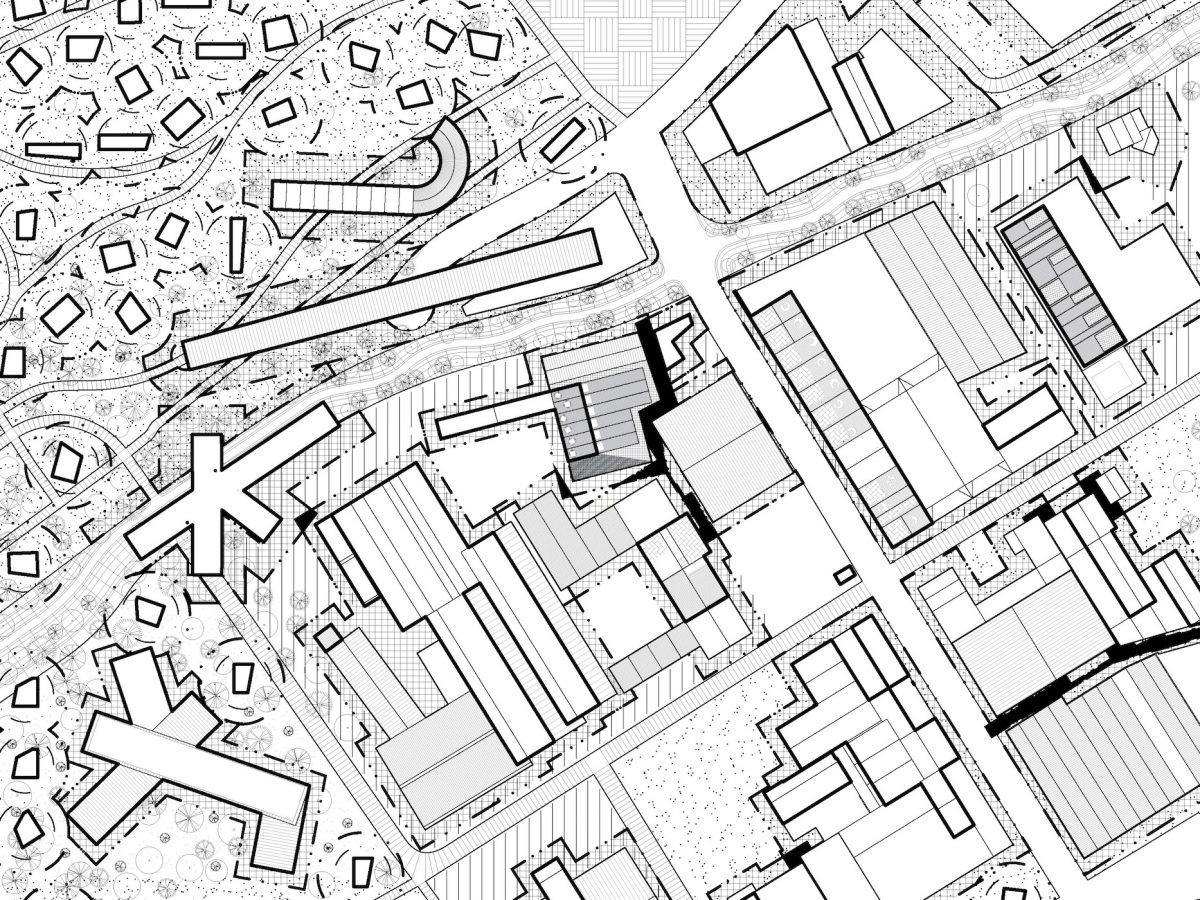
The goal of this studio was to create a platform for students to understand and develop a thesis topic that supports current trends of architectural discussion in today’s context. Specifically, the studio looked at ‘Construction, Abstracted’ as a disciplinary problem. Throughout the semester, students were asked to participate in a series of assignments that engaged in conversations and theories on this topic. The section focused primarily on different ways of working, both through modes of techniques for accidental and deliberate disciplinary misbehavior to help students argue and position their placement within a larger architectural discourse. Additionally, the studio explored the possibility of misaligning work for creative speculation.

Categories
Arch 698b: The Other California

Instructor: Alison Hirsch

The Invisible Crisis

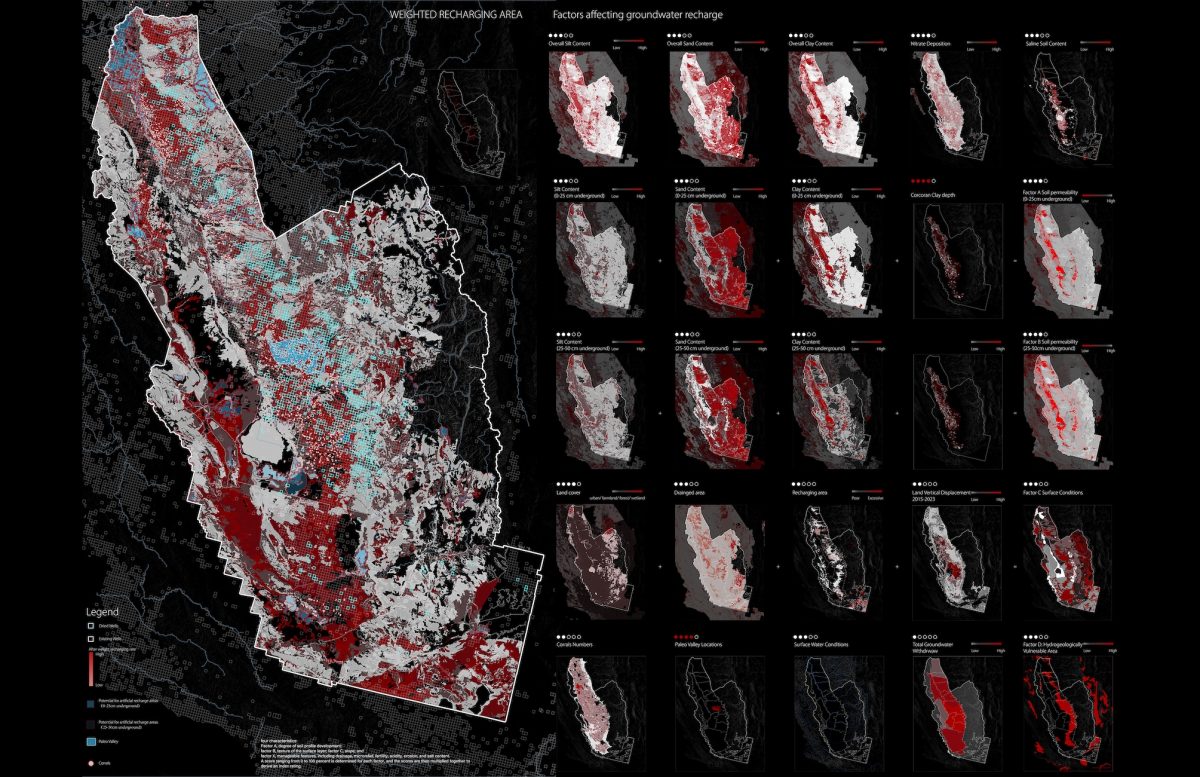
The agriculture in Tulare Basin heavily relies on groundwater irrigation, constituting 97% of water usage. Over the past few decades, excessive overpumping has caused severe land subsidence and nitrate contamination, compounded by fertilizer application and septic systems. Corcoran Clay, known for its nitrate-filtering properties and low infiltration rate, poses both challenges and opportunities. Similarly, paleo valleys, with their high permeability, offer potential for artificial recharge and underground water storage. My strategies include redirecting contaminated water to clay-rich zones by terrain design; utilizing dried wells and change existing crop plant strategies; utilizing phytoremediation and sequential wetlands for nitrate absorption then linking paleo valleys to store excess water and recharge aquifers. These strategies aim to address groundwater pollution, water distribution issues, while maximizing recharge efficiency and increase land productivity

Categories
Arch 698b: The Other California

Instructor: Alison Hirsch

The Allensworth Agricultural Experiment Station

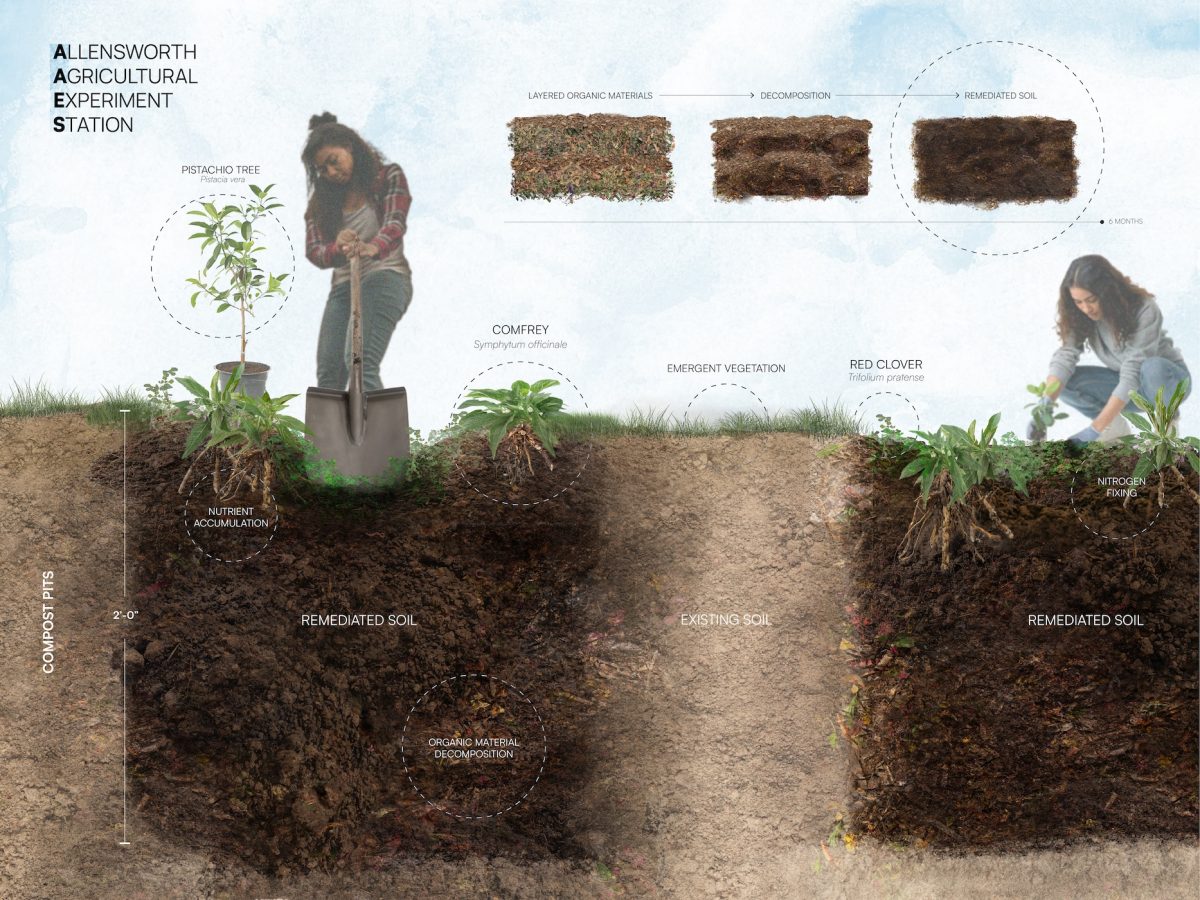
The Allensworth Agricultural Experiment Station is a 4,000 square foot site in Allensworth, CA that will test out different types of soil revitalization techniques and agroecological planting configurations that can increase soil fertility, create habitat, engage the local community. Built in collaboration with the non-profit Allensworth Progressive Association (APA), the project aims to determine the most effective methods for remediating and cultivating the severely degraded soil with the goal of employing the same methods on a larger parcel of land in the future for the APA’s aspirational agroecological, educational community farm. Upon its founding in 1908, Allensworth was the first town in California to be founded and governed by Black Americans and was intended to be a “Tuskegee of the West”, inspired by the university in Alabama established by Booker T. Washington, which provided vocational training for Black students with an emphasis on agriculture. The AAES is inspired by the Tuskegee Agricultural Experiment Station, a 10-acre farm run by George Washington Carver at the university from 1897-1943, which experimented with different organic farming processes and provided education on cost-effective and sustainable methods of food production for Black farmers. This project also aims to go beyond the scientific and ecological aspects of soil rehabilitation for food production and engages in a larger conversation about BIPOC liberation on the land. Large-scale agricultural production in the US has its origins in the plantation economy and the forced labor of enslaved Africans and is sustained by the continued exploitation of Latinx farmworkers and other communities of color. AAES will create a space to execute agricultural practices that feed soil using organic materials, have closed-loop systems for waste, encourage ecological diversity, are able to produce food in extreme arid climates, and honor the culturally-significant and place-based land stewardship practices of the Allensworth community. In a time of increasing climate uncertainty exacerbated by industrial farming, this project can hopefully contribute to an alternative framework for food cultivation and soil regeneration in the Central Valley that highlight the contributions BIPOC communities have made to agriculture, and honor the liberatory vision of Allensworth.

Categories
Arch 698b: The Other California

Instructor: Alison Hirsch

Game of Landscape Go

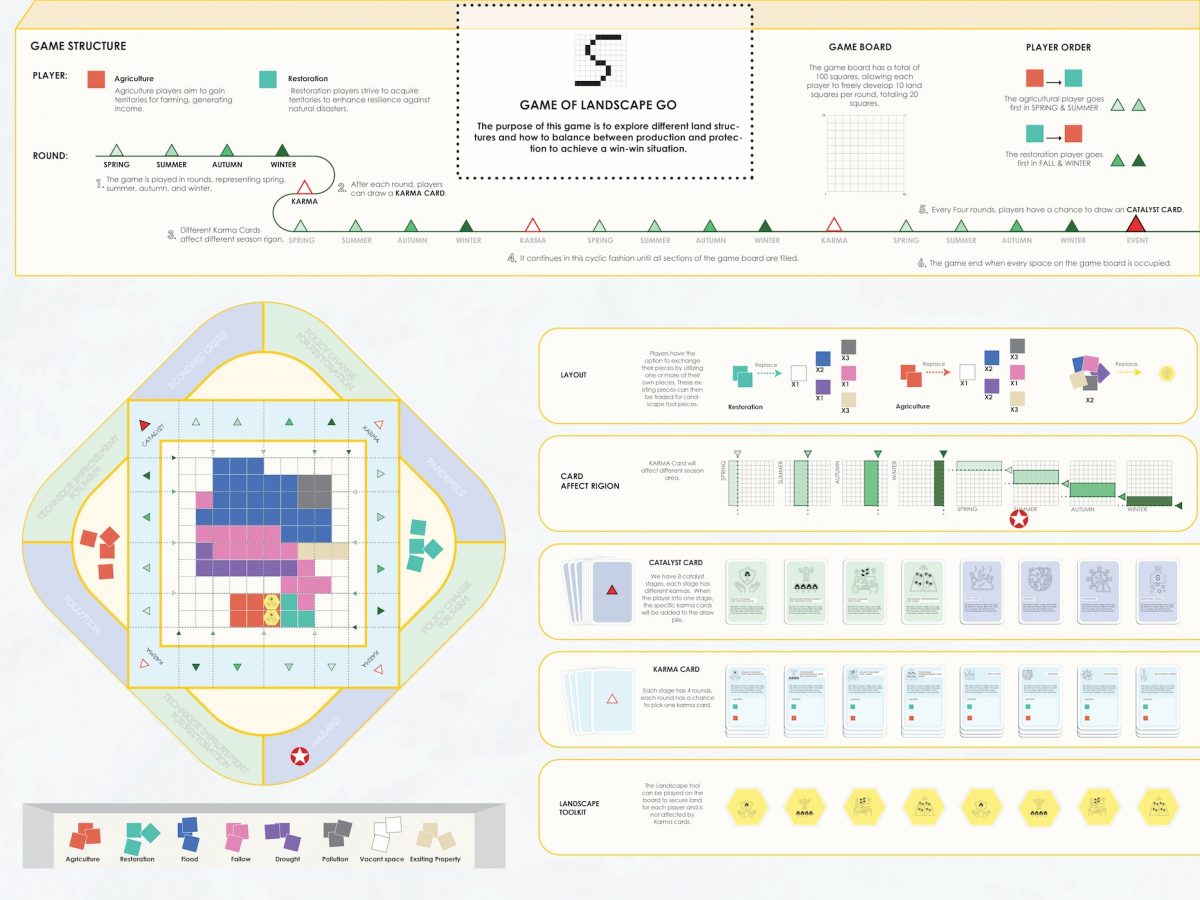
“Game of Landscape Go” offers a unique opportunity to serve as an educational tool in landscape design, environmental management, and urban planning. This innovative game simulates responses to economic crises, pandemics, hazards, and pollution, fostering understanding of sustainable land development. Suggestions include expanding scenario databases, integrating landscape design strategies, and refining Karma and Catalyst Cards for balanced gameplay. By engaging with these strategies, players gain practical insight into sustainable practices, benefiting landscape designers, environmental professionals, and stakeholders alike.

Categories
Arch 698b: The Other California

Instructor: Alison Hirsch

Heart of a Hometown

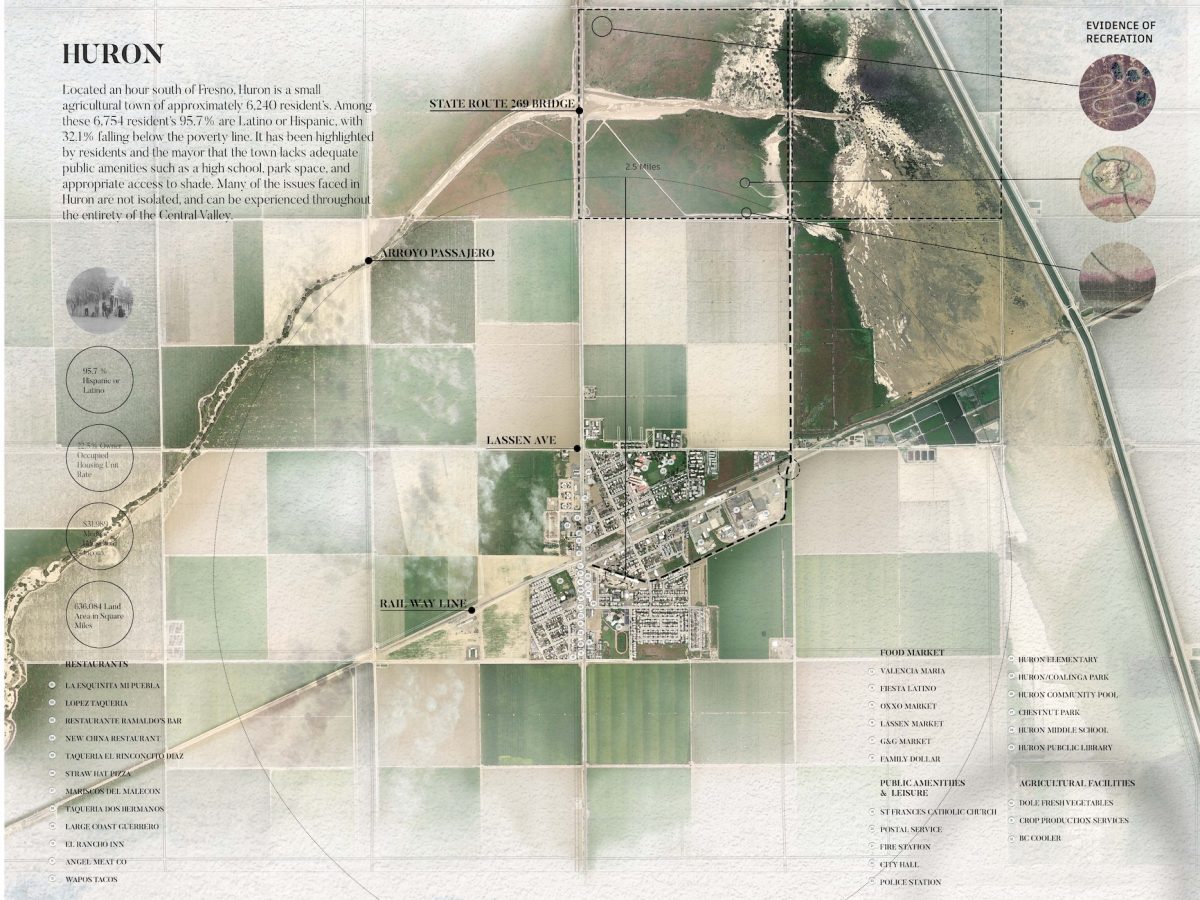
Located an hour south of Fresno, Huron is a small agricultural town with approximately 6,240 residents. Among these, 95.7% are Latino or Hispanic, and 32.1% live below the poverty line. Towns like Huron play a critical role in supporting the labor force for the agricultural industry in the region. However, these rural communities often suffer from inadequate public services, housing, and environmental inequalities.This project aims to strategically navigate the constraints imposed by the current economic, environmental, and social landscape, establishing a roadmap for agricultural towns in the central valley. Through diversifying their economies, creating resilient environmental infrastructure, and providing adequate housing for both permanent and temporary residents, Huron and its residents may be better adapted to the new parameters set forth by SGMA.

Categories
Arch 698b: The Other California

Instructor: Alison Hirsch

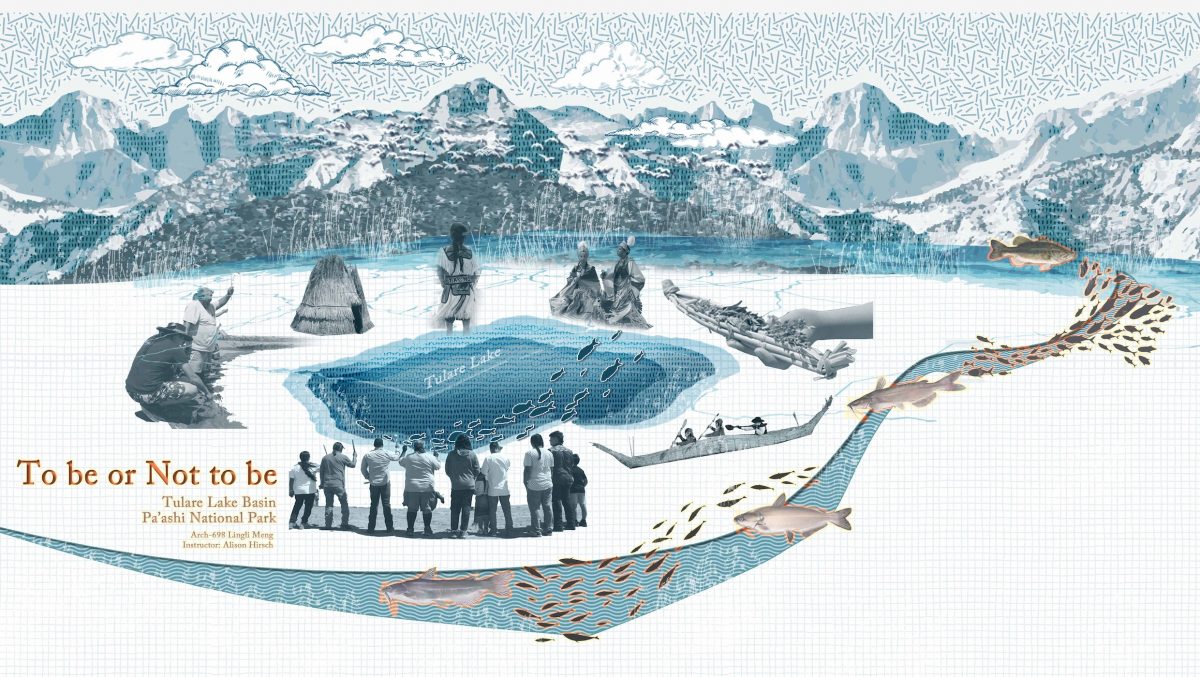
To be or Not to be

The return of Tulare Lake has prompted us to rethink our relationship with nature. My research proposes living in harmony with the lake, recognizing its re-emergence as a revival of cultural and ecological values, rather than controlling it. Inspired by the way indigenous people adapted to the lake, I proposed a dynamic national park that could adapt to fluctuations in the water, with boundaries defined by the water level. This approach promotes coexistence with the natural cycle of the lake and co- management with the tribe, enriching cultural and economic values. This initiative aims not only to restore Lake Tulare naturally, but also to highlight its cultural and ecological significance and encourage a deeper understanding of its history and future potential.